
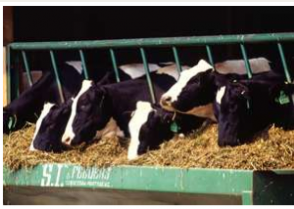
After decades of foot-dragging and inaction in the implementation of its own1977 rule to rescind approvals for the use of certain antibiotics in farm animals, it might be foolish to believe that the Food and Drug Administration would finally comply with the March 2012 order issued in New York by Federal Court Judge Theodore Katz to act on its long-ignored rule. Especially since it also managed to stonewall countless lawsuits initiated by consumer and health advocacy groups—such as the one led by the National Resources Defense Council last year—that have held the FDA’s feet to the fire without success.
While the FDA readily acknowledged that feeding farm animals low doses of certain antibiotics could produce dangerous, possibly lethal strains of highly infectious antibiotic-resistant bacteria that are easily transmitted to farmers, livestock, meat handlers, consumers, pets and other animals and humans who come in contact with carriers of these organisms, for the last 35 years, it has taken no action to prevent this calamity from happening. The FDA did put up a smokescreen in the form of an ‘order’ to ban non-medical use of penicillin and tetracycline in farm animals, but only contingent on the drug companies’ judgment on whether or not these antibiotics were safe to use for this purpose. In the meantime, the FDA ‘order’ or ‘rule’ was never enforced. Blame was pinned on resistance by Congress, lobbyists for factory farms (i.e. Big Agriculture) and of course, by pharmaceutical companies.
Solution: Be Proactive In Protecting Your Health
• Take matters into your own hands by becoming an educated consumer. (We’ll help start you off with our thoroughly researched and fact-checked information right here. Ask us questions, correct our glitches and we’ll keep doing the work for you.)
• Stick with organic foods (locally grown when possible). You’ll avoid toxic chemicals, nutrition-poor produce grown in depleted soil and animal productslaced with hormones, antibiotics, pesticides, fungicides and other junk not meant for human consumption.
• Since stray livestock or other natural interference can—on thankfully rare occasions—contaminate even some carefully tended organic produce in theirfields, we advise meticulous cleaning of fruits and vegetables before eating, cooking or storing for future consumption. (Click onhttp://freerangeclub.com/food-safety/save-water-health-time/ for cleaning and storing tips.)
• Above all, good information eliminates fear and worry, empowers you to make smart food choices, keeps you healthy, improves your disposition and saves you money in sooo many ways… Plus, when enough of us vote with our $$$, good things happen in the food industry—as proven by the huge increase in the production and availability of organic foods.
DER
Update: New FDA Restrictions On Antibiotics Use For Farm Animals
April 11, 2012—As of this day, the Food and Drug Administration will permit agricultural use of antibiotics only by prescription from veterinarians. It is a somewhat stingy but still welcome concession made to public health, either as a result of last month’s court order to tighten controls over the use of these drugs for farm animals, or perhaps because of the public outcry over the growing—and often lethal—epidemic of infections caused by antibiotic-resistant superbugs. An epidemic which is estimated to sicken about two million people and kill nearly half of them every year.
Since some 80 percent of antibiotics sold in the United States are used to keep farm animals and poultry alive and growing while they are raised in 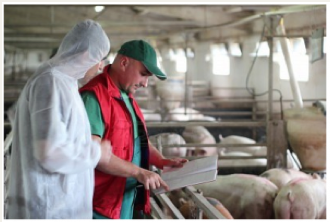 unhygienic and dangerously crowded conditions, the FDA’s new restrictions are sure to take a bite out of factory farms’ profits. Let’s hope there won’t be loopholes or detours devised around these rules to make up potential losses, although it might be too much to hope that veterinarian expenses won’t be used as excuse for increases in the price of animal products in grocery stores.
Appointed last year with a mandate to help protect the safety of U.S. food supplies, Michael R. Taylor, the FDA’s deputy commissioner for foods, predicts that since these restrictions will make access to antibiotics more costly, time consuming and complicated, they will save lives by “significantly” reducing the use of antibiotics in agriculture.
Our research shows, however, that even if Mr. Taylor’s prediction turns out as he expects (which, with all due respect, we seriously doubt), the epidemic of intractable infections caused by antibiotic resistant bacteria will continue until we stop consuming daily doses of antibiotics in our beef, pork, chicken and turkey meats.
The Dark Side Of Antibiotics: Few people know that in addition to being among the world’s most effective life-saving drugs, antibiotics also have a built-in flaw: They cannot tell the difference between bad (illness-causing) bacteria and the beneficial bacteria (or ‘friendly flora’) which lives in the human intestines and is essential to the health and function of both the immune and digestive systems. Because antibiotics cannot discriminate, they destroy both harmful and helpful bacteria they encounter. Healthy individuals. exposed to small but frequent doses of the drug through consumption of animal foods that have been treated with it, often have digestive problems and weakened immune systems that show up as fatigue and susceptibility to—you guessed it—infections caused by the superbugs.
When, on the other hand, an illness is treated with a course of doctor-prescribed antibiotics, both harmful and beneficial bacteria are killed, leaving the body depleted of recuperative resources and thus slowing or stalling recovery.
Prevention And Remedy: Fortunately, the first problem can be reversed by switching to organic meats (and/or fish) that have not been treated with antibiotics or changing to a vegetarian or vegan diet; while also taking good quality, dairy-free probiotic supplements daily (at least once a day, preferably first thing in the morning, on an empty stomach), to replenish and maintain a healthy level of friendly flora in the gut.
During illnesses that are being treated with antibiotics, probiotics should be taken one hour before each meal and the medication after or while finishing the meals. Including even small amounts of starchy carbohydrates in meals also helps friendly bacteria colonies take hold and grow faster.
When eating out, pick restaurants that serve organic meats—or choose vegetarian dishes. And don’t forget to make probiotic supplements your daily routine.
Dina Eliash Robinson
8 Comments on “Will FDA Comply With Court Order It Has Ignored For 35 Years?”
Currently it appears like BlogEngine is the best blogging platform out there right
now. (from what I’ve read) Is that what you’re using on your blog?
We use Word Press!
Organic foods are always the best since they do not contain trace amounts of pesticides and other harmful chemicals. *
Our new blog site
http://www.homeimprovementstuffs.com/kitchen-soap-dispensers/
Greetings from Idaho! I’m bored to death at work so I decided
to browse your site on my iphone during lunch
break. I love the information you provide
here and can’t wait to take a look when I get home. I’m amazed at
how quick your blog loaded on my phone .. I’m not even using WIFI, just 3G ..
Anyhow, very good site!
I just couuld not depart yourr site before suggesting that I actually enjoyed
the standard information an individual provide to your visitors?
Is going to be back frequently in order to check up on new posts
Have you ever thought about publishing an e-book or guest authoring on other sites?
I have a blog based on the same subjects you discuss and would really like
to have you share some stories/information. I know my viewers would appreciate your work.
If you are even remotely interested, feel free to send me an e mail.
Hi Geri Darcy,
Thank you for your kind words and suggestions.
(1) As a journalist, author, broadcaster, writer of web content & other works, I have, indeed, thought a lot about writing a book (I would prefer print to electronic), ‘just as soon as I had some time to do it,’ has been my excuse for putting it off.
(2) With all that’s on my plate, I couldn’t commit to contributing ‘guest author’ pieces to other sites. However, your or other sites are welcome to LINK to any section or topic posted on http://www.FreeRangeClub.com, by quoting the URL of any page(s) of interest. In fact, my partners and I would be most appreciative of such links, since our goal—as you probably can tell by reading FRC postings—is to help as many people as possible live healthier lives through good nutrition, economic grocery shopping, food handling & storage, efficient (i.e. as quick & easy as possible) cooking & tasty, enjoyable meals.
(3) I visited your Sugar-Free-Yogurt site, found it, informative, well designed and written, & quite inviting with its variety of entries & bright illustrations. It does, however, contain a fair amount of advice we think does not encourage the healthiest possible eating habits. As you probably noticed, FRC is dedicated to “using food as medicine,” the advice given by Hippocrates in ancient Greece—which means that eating healthy foods keeps people healthy WITHOUT pharmaceuticals (‘medicine’).
(4) The more blogs, recipes & columns posted on FreeRangeClub.com you read, the more you will realize that we are encouraging our readers to eat organic foods to avoid toxic pesticides & other chemicals, as well as to choose & combine meal ingredients in ways that best suite individual needs—such as heart-healthy, protective of diabetics, etc.
(5) You may QUOTE a paragraph or two, here and there from some of our COPYRIGHTED FreeRangeClub.com content, ON CONDITION that the quote is accompanied by a sentence such as, for example, “(Dina E.R. or Catharine K. or whoever might be the author of the piece from which you quote) advises that….. (body of quote)…” or some similar attribution.
(6) If you’d like to chat about food or our respective sites, email me your phone number & I will call you as soon as I can.
Hope this is helpful.
Be well & prosper.
Dina Eliash Robinson, Editor in Chief
http://www.FreeRangeClub.com
Excellent goods from you, man. I have understood (your previously posted) stuff
and you’re just too excellent. I actually
like what you’ve (written) here, really like what you
are saying and the way in which you say it.
You make it entertaining and you still take care to keep it sensible.
I cant wait to read much more from you. This is actually a great web site.
Generally I don’t read article on blogs, however I
wish to say that this essay was so interesting. Your writing skills amaze me.
Thanks so much, quite a great article.