
 Eggs have been lately the most feared carriers of misery, illness and even death by salmonella—although sadly, they are not the only contaminated food that pops up with alarming frequency on the Government’s list of recalled products. In fact, hardly a day goes by without consumers being warned to avoid some toxic grocery item or another.
Deplorable conditions on large chicken farms are the most common causes of salmonella outbreaks in both the birds and their eggs. Luckily, because of the frequency, wide reach and epidemic proportions of these outbreaks, most people have learned to handle and cook fowl and eggs—as well as other land- and water-dwelling animal products—with the particular care advised by health and food safety authorities.
Until recently, my research showed that eating organic foods is one way to avoid not only toxic pesticides, fungicides, chemical fertilizers and genetically engineered (Frankenstei) foods, but also such food-borne bacteria as salmonella and e-coli. And although this is quite true more than 99% of the time, it is still a good idea to wash, store and cook food as safely as possible. (See the Save Water, Health & Time post on this site.)
EGG DETOXING TIP TO KEEP YOU SAFE: Don’t even think of storing the eggs you just brought home from the store—at least not before you follow the quick and easy steps shown in the photos below:
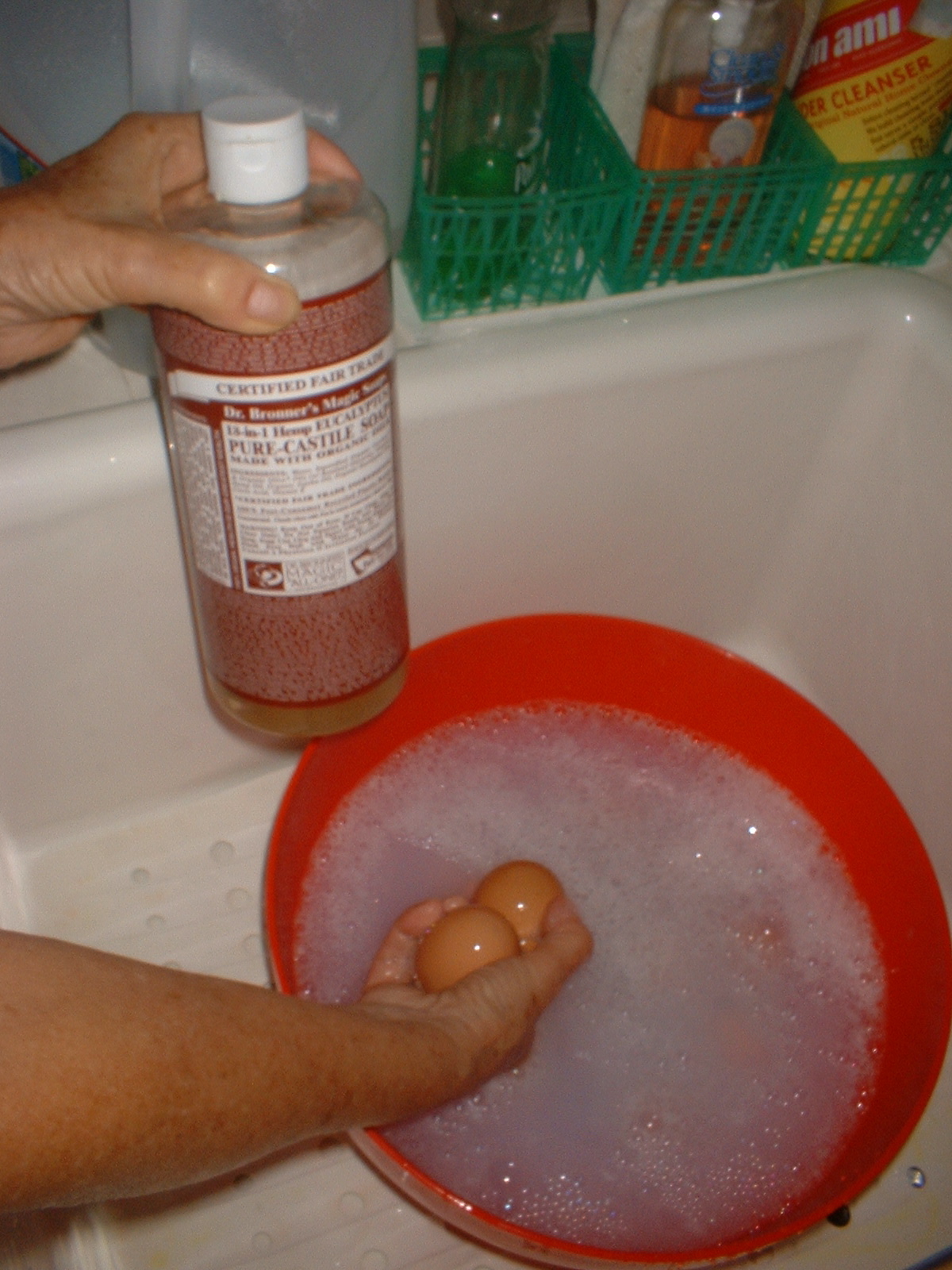
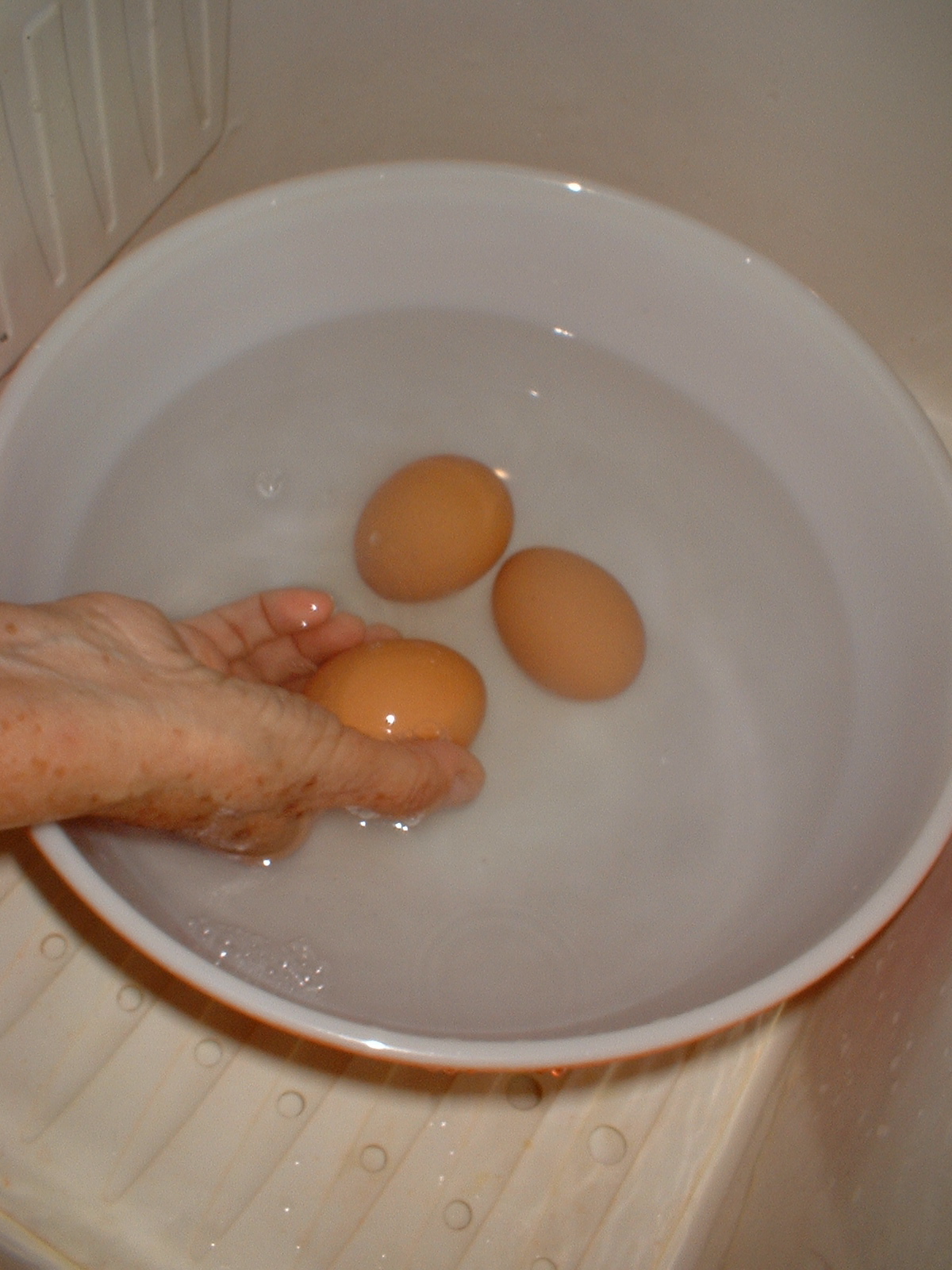
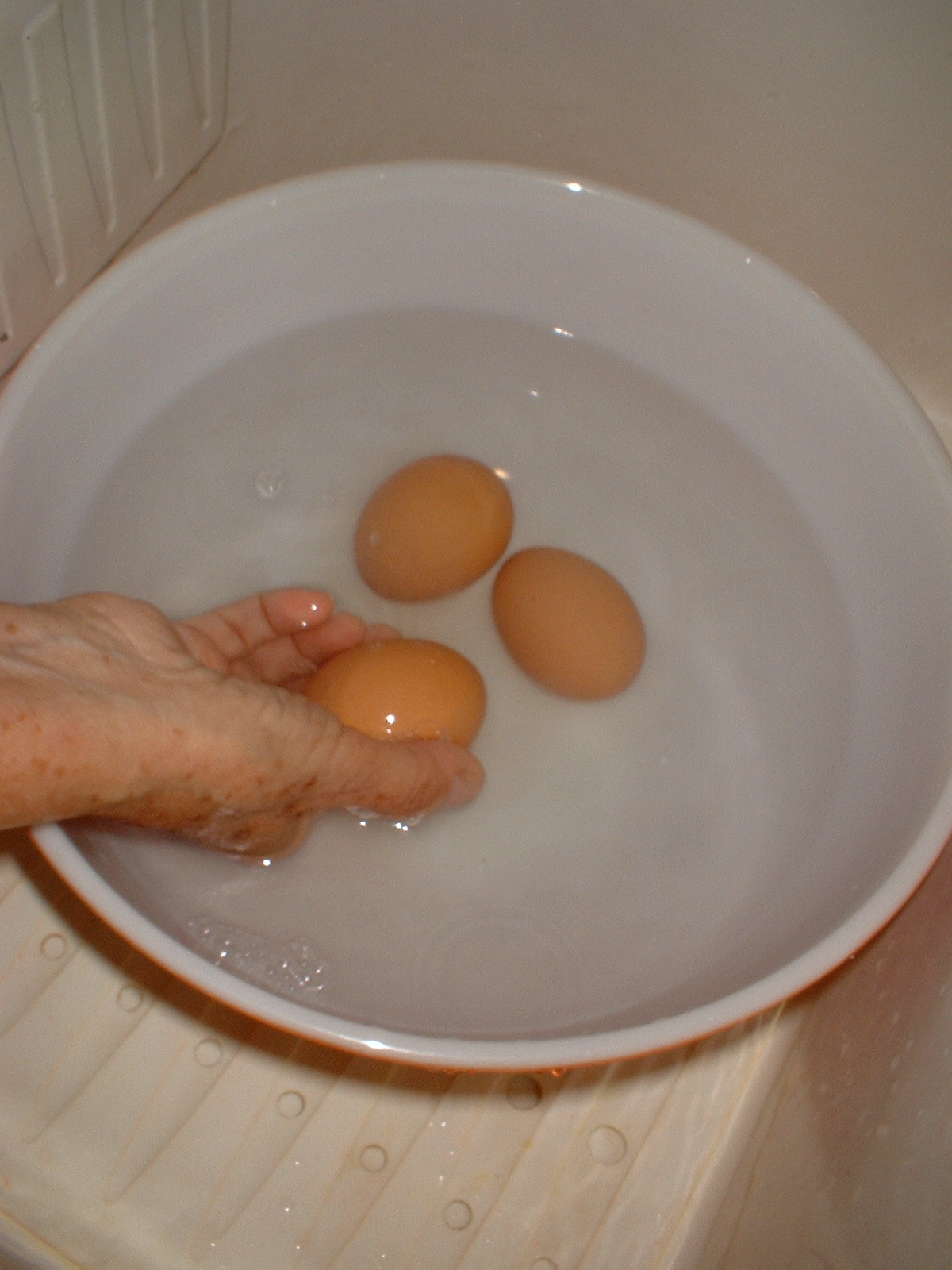
Step One: Fill two bowls with cold water & add 2-3 good squirts of liquid, Eucalyptus-infused Castile Soap into one of the bowls.
Step Two: Take eggs out of the carton, make sure they have no cracks and place them carefully into the soapy bowl. Gently wash each by hand.
Step Three: Carefully transfer eggs into the clean water bowl and rinse them.
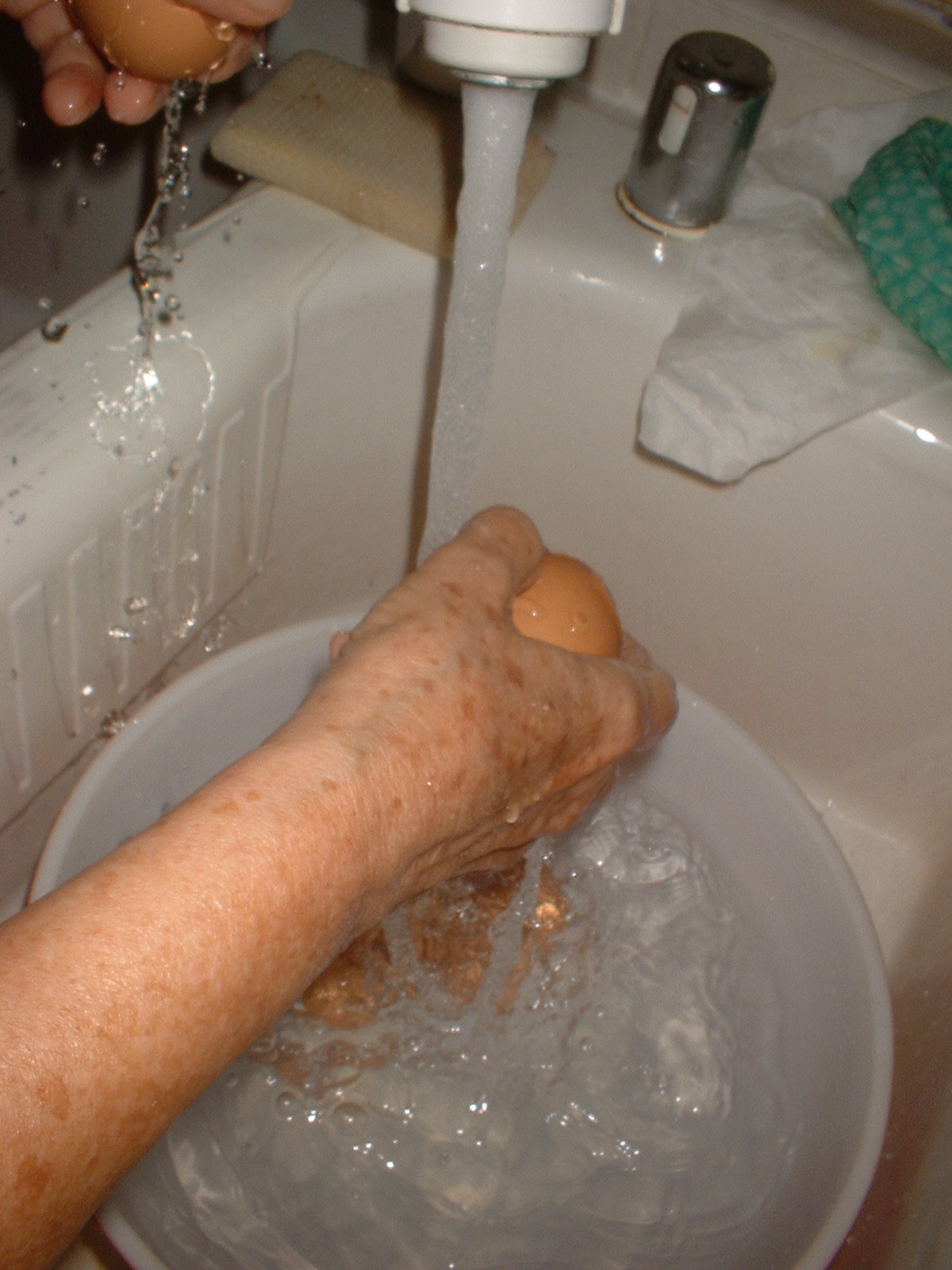
Step Four: If still soapy, rinse eggs under running water and place in colander.
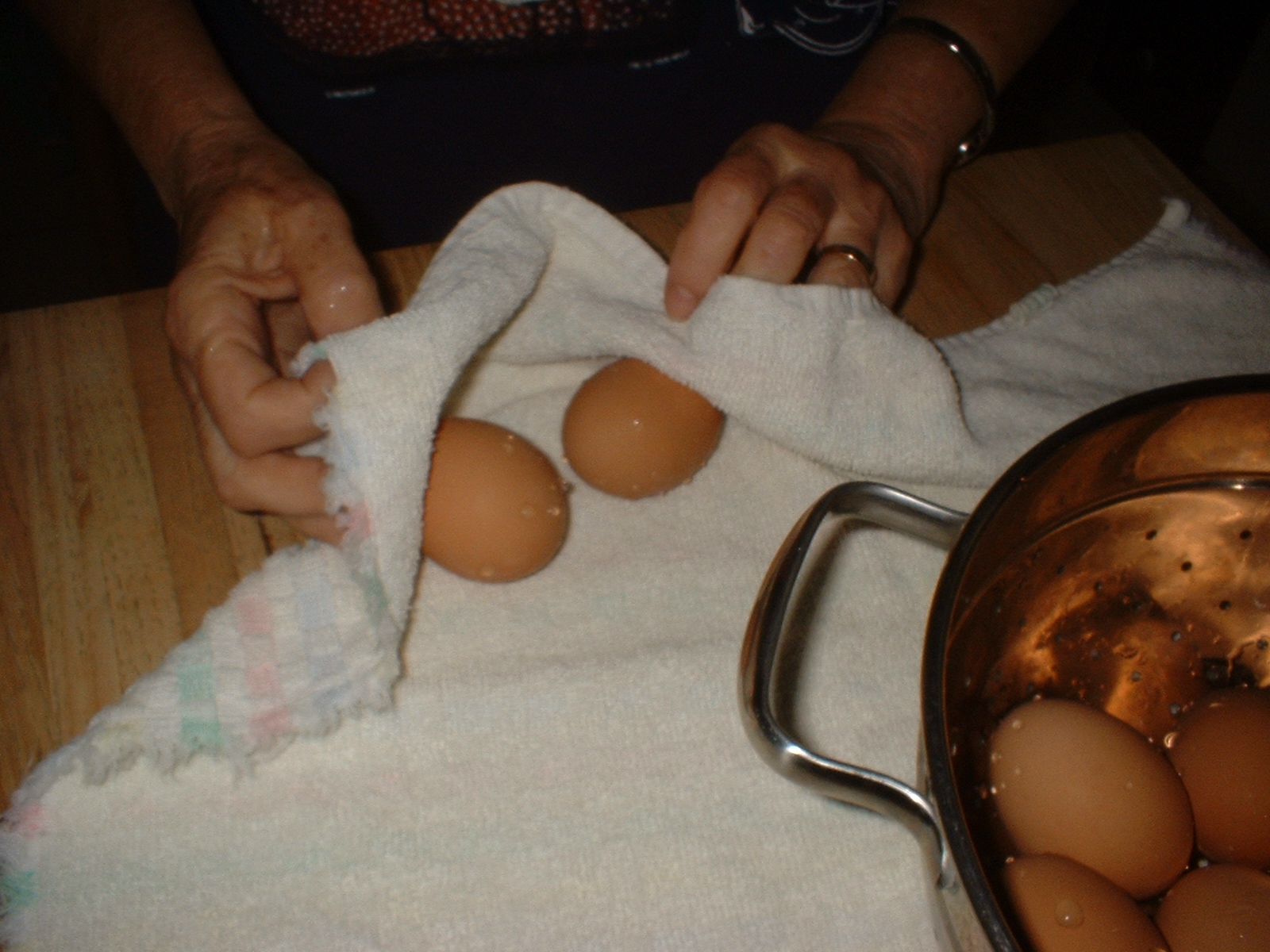
Step Five: Transfer eggs, two at a time, onto kitchen towel, pat dry gently.
Step Six: Store eggs in your refrigerator’s egg-holder. Do NOT return them to the packaging in which they were sold. Recycle the latter.
Other tips on preventing potential harm caused by tainted eggs include:
a) Cook eggs until both yolk and albumen (egg white) are firm throughout—no matter how much you prefer runny scrambles or sunny-side-up. Prudent experts advise that pure egg whites, as well as all mixtures that contain any egg parts or products should be cooked at 160 degrees F, until solid.
b) Avoid raw or partially cooked eggs—even organic—in any form, including Caesar salad dressing, Hollandaise sauce, drinks (such as shakes, eggnog or hangover remedies), etc.
c) When buying eggs, open the carton and check each one carefully, to make sure they are clean (no dirt or debris on shells) and whole, without ANY nicks or cracks.
d) While pasteurization is believed to destroy some of the egg’s nutritional value, eggs marked “…pasteurized in their shells” provide extra protection from salmonella for people with weak or compromised immune systems.
e) Keep informed and up-to-date on recalls and all the data that will help you identify the recalled eggs—such as the brand, manufacturing plant number (flagged by the letter “P” and the four numbers that follow it) and the packaging date (different from the “sell-by” date). Ask the sales staff to confirm the information and if they do, see the manager and request that the recalled eggs be removed from display shelves.
f) After you’ve washed the eggs as shown above, store them in egg holders kept in the center of your refrigerator where it is cold enough to keep them fresh for 10 days to two weeks. A few days on the coldest bottom shelf, eggs often freeze. (Fair disclosure: I have always kept my eggs at the top of my refrigerator door and not a single one has gone bad—so far.)
g) Wash hands before cracking eggs and after you have discarded the shells. Wash with soap and water every container and surface that has come in contact with raw eggs (or with chicken, meat or fish, for that matter).
If you have any questions, please e-mail us at [email protected]. More information is also available at www.eggsafety.org.
Let’s hope someday the Food & Drug Administration (FDA) and U.S. Department of Agriculture (USDA) will be given the resources to keep our food supply safe, as well as be provided with the authority to recall tainted or mislabeled foods—instead of having to rely on producers’ voluntary recalls.
In the meantime, we will continue to keep you informed about what’s safe and healthy to eat and how to prepare foods in the most delicious and economical way.
Dina Eliash Robinson
2 Comments on “SHORT TAKES: Clean Eggs Before Storing to Prevent Salmonella”
Salmonella can be very deadly because they produce toxins which can damage the human body. always be careful when eating foods outside of your house. ,:*:;
My own, personal web page
http://www.caramoantourpackage.com
I was always told if you have your wash eggs then to do it in warm water not cold, as egg shells are porous and cold water will draw bacteria inside, where as warm water will not.